
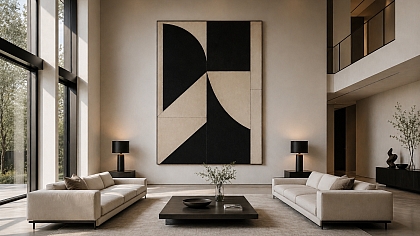
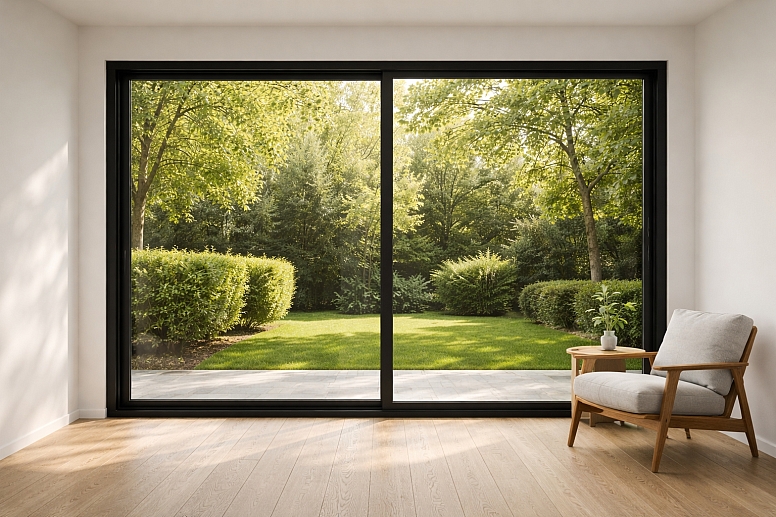
Aluminium Windows & Doors: Slim Frames, Maximum Light
Walk past any recently completed residential project. The aluminium windows and doors that catch your eye are the ones that almost disappear; slim profiles holding large glass panels, dark frames against pale plaster, or bronze anodised sections warming a library wall. The material allows spans that timber cannot match and sightlines that uPVC cannot approach.
When detailed correctly, aluminium frames become less about the frame and more about the view, the light, and the transition between inside and outside.
Summary:
- Minimum frame sightlines reach 35 mm for casement windows and 25 mm for fixed glazing.
- Dual-colour finishes enable different colours on interior and exterior faces (e.g., black outside, white inside).
- Thermally broken profiles allow floor-to-ceiling installations without condensation staining on adjacent plaster.
- Concealed hinges and flush sash designs create continuous planar surfaces.
- Powder coating offers over 200 RAL colours plus textured and metallic finishes.
The Visual Impact of Narrow Sightlines
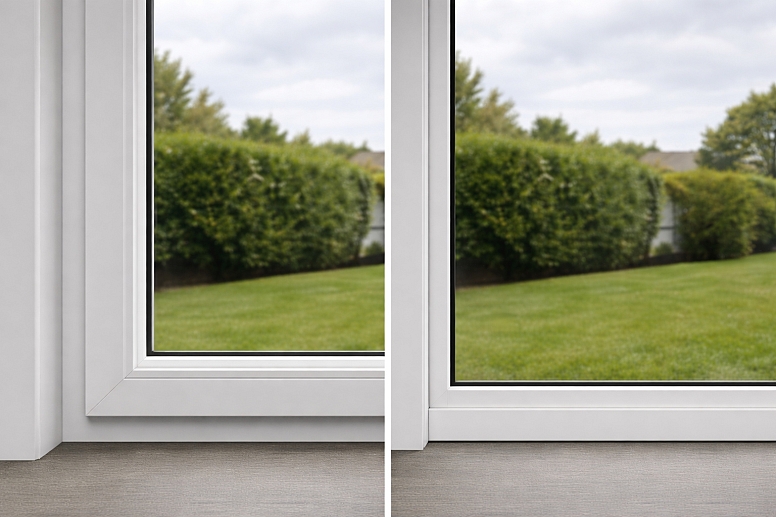
The most noticeable feature of a well-designed aluminium window is what you do not see. A fixed aluminium frame can achieve a sightline of just 25 mm on each side. For a 2 m wide window, the frame occupies only 5% of the total facade area. Compare that to timber (60–90 mm sightline, 12–18% frame coverage) or uPVC (65–100 mm, 13–20%). That difference changes a room. More glass means more light, deeper shadow lines, and a stronger connection to the outdoors.
For operable windows, casement and tilt-turn systems hold sightlines at 35–50 mm. The mechanism hides within the profile, not bulging into the glass area. Sliding doors achieve a 40–60 mm visible frame when closed, with the meeting stile (where the two door panels overlap) as narrow as 35 mm. Bi-fold systems stack tightly, with each leaf occupying 80–100 mm when folded, keeping the opening clear when fully retracted.
The psychological effect is measurable. Rooms with narrow-frame glazing feel larger. The eye travels across the glass uninterrupted. Externally, a facade with slim aluminium frames reads as a single composition rather than a grid of holes punched into a wall.
Surface Finishes That Define a Space
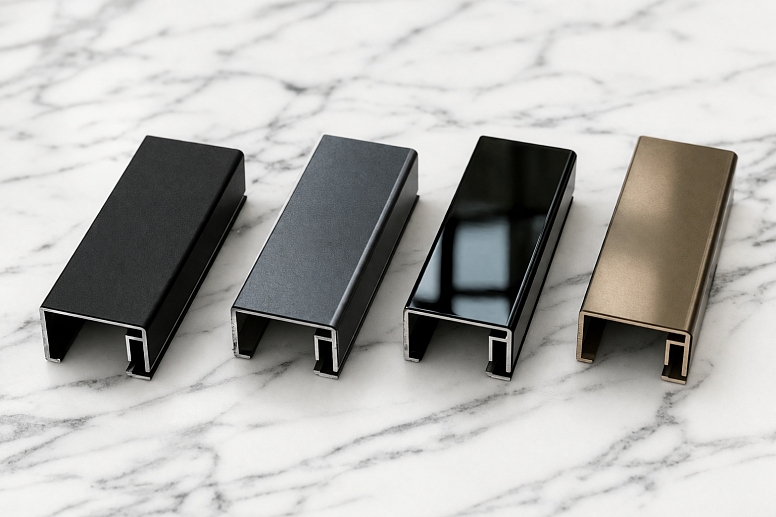
Aluminium accepts applied finishes better than any other window material. Powder coating bonds to the metal through electrostatic attraction, followed by heat curing (180°C for 10 minutes). The result is a uniform, durable surface that hides extrusion marks and handles.
Matt finishes dominate contemporary residential work. RAL 9005 (jet black) on a flush sash against white render creates high contrast. RAL 7016 (anthracite grey) reads as softer but equally modern. For coastal projects, RAL 9010 (pure white) reflects heat and reduces thermal bowing.
Textured finishes simulate anodised aluminium or even weathered steel. Fine-texture powder coatings (30–40% gloss) hide fingerprints on sliding door handles and window sills. Coarse textures (10–15% gloss) suit industrial-style lofts and exterior cladding transitions.
Metallic finishes use aluminium flakes within the powder. They catch light differently throughout the day. A bronze metallic frame on a west-facing elevation glows in the afternoon sun. A silver metallic frame stays cooler and reads as neutral against brick or stone.
Anodised finishes leave the aluminium visible as metal, not paint. The electrochemical process thickens the natural oxide layer. Clear anodising preserves the raw aluminium colour. Champagne, bronze, and black anodising add colour without hiding the metallic character. Anodised surfaces feel cooler to the touch than powder-coated ones and suit minimalist, industrial, or Japanese-inspired interiors.
Dual-colour finishing is standard from quality fabricators. The exterior can be dark bronze to recede against landscaping, while the interior is white to match plaster walls. Or the exterior can be a heritage green for a period conversion, while the interior is warm grey for a modern fit-out.
Five Inspiring Installations
Each configuration changes how a room feels, how light moves, and how the boundary between inside and outside reads.
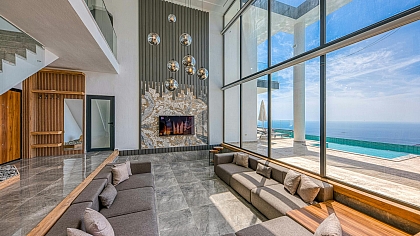
Black Framed Sliding Doors in a Beach House
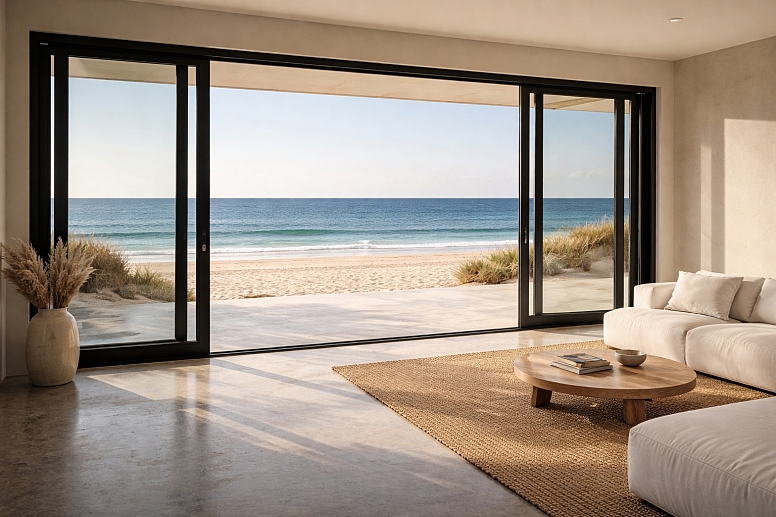
The look: A single-track sliding door system with three panels, 3.6 m wide. The frame is RAL 9005 jet black, matt finish, 50 mm sightline. The track is recessed flush into a polished concrete floor. No threshold step. The interior floor slab continues outside to a terrace, then to sand.
Why it works: The black frame anchors the view without competing with the ocean. The recessed track removes the visual barrier of a raised threshold. The matte finish does not reflect glare into the room. The 50 mm stile between panels is narrow enough that the three panels read as one continuous glazed opening when viewed from inside.
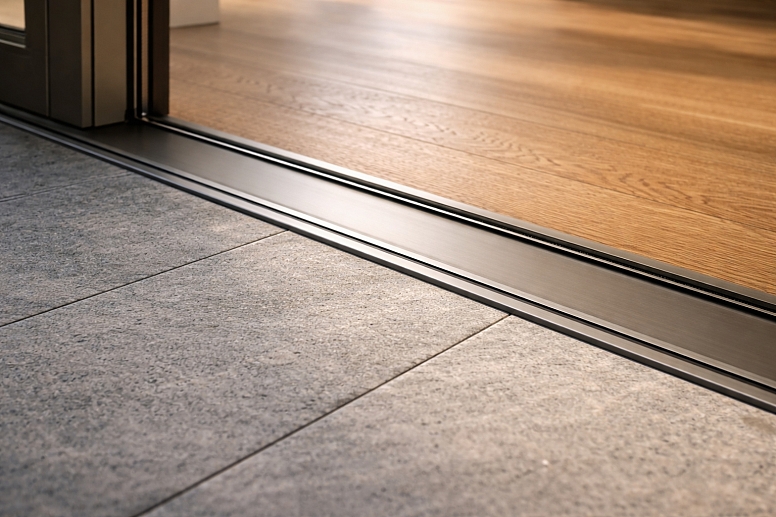
Design mistake to avoid: Specifying a bottom-rolling system with a visible track. Top-hung sliding doors allow a flush floor track (3–5 mm tall) that disappears underfoot. Bottom-rolling systems require a 15–20 mm raised track that interrupts the visual flow and creates a trip hazard.
Achieving The look: Specify a top-hung sliding door system. Recess the bottom guide track into the screed before pouring the floor finish. Use a matte black powder coating. Keep the panel width under 1.2 m to limit individual leaf weight to 80 kg.
Bronze Anodised Casement Windows in a Library
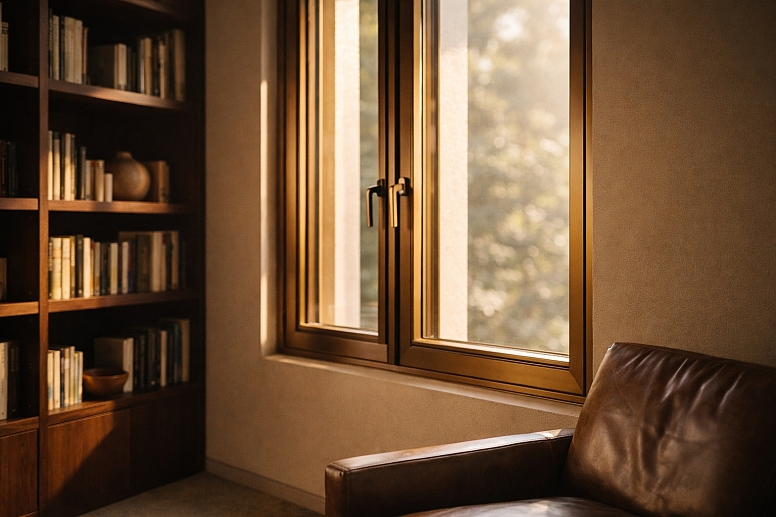
The look: A pair of tall casement windows (2.4 m high, 1.2 m wide each) in a residential library. The frame is bronze anodised (Class AA25), with a visible sightline of 40 mm. The windows are inward-opening with concealed hinges. The interior reveals are lined with the same bronze anodised aluminium, wrapping the opening like a picture frame.
Why it works: Bronze anodising changes with light. In morning sun, it reads as warm brown. In overcast conditions, it darkens to near-black. Against dark timber shelves and a leather chair, the frames feel like furniture rather than fenestration. The concealed hinges remove visual clutter. The wrapped reveal makes the window opening feel deliberate and crafted.
Design mistake to avoid: Specifying standard outward-opening hinges. Outward hinges are visible from inside and break the clean line of the frame. Inward-opening with concealed hinges keeps the interior face planar.
Achieving The look: Choose anodised finish over powder coating for the metallic depth. Specify AA25 anodising (25 micron thickness) for abrasion resistance in a high-touch area. Use the same anodised aluminium as a lining on the window reveal (jambs, head, and sill). Specify concealed scissor hinges rated for the leaf weight (50–70 kg per sash).
White Flush Sash Windows in a Minimalist Apartment
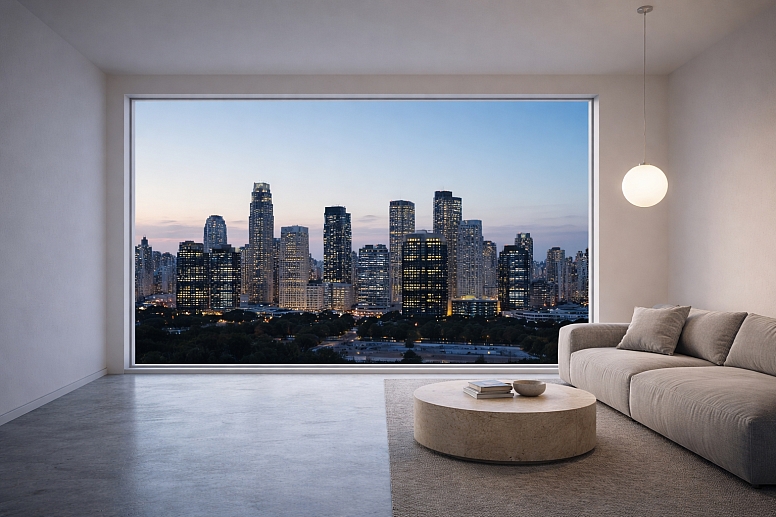
The look: Floor-to-ceiling fixed windows (2.8 m high, 3 m wide) with a flush sash design. The frame is RAL 9010 pure white, powder-coated with a fine-texture finish. The external face is flush with the building facade. The internal face is flush with the plaster wall. No visible frame projection on either side.
Why it works: Flush sash means the glass sits in the same plane as the outer frame surface. From inside, the wall appears to stop, and glass begins without a ledge or sill. From outside, the facade reads as a continuous surface interrupted only by glass. This detail is rare in residential work and signals high-end design.
Design mistake to avoid: Using standard glazing beads. Flush sash requires structural glazing or captured glazing with the bead hidden on the exterior face. Standard clip-on beads sit proud of the frame and break the flush line.
Achieving The look: Specify a flush sash system with structural silicone glazing or a hidden bead system. Use a fine-texture powder coating to reduce glare on bright days. Keep the frame depth at 70 mm minimum to accommodate the glazing and maintain stiffness over a 3 m span.
Dark Grey Bi-Fold Doors to a Courtyard Garden
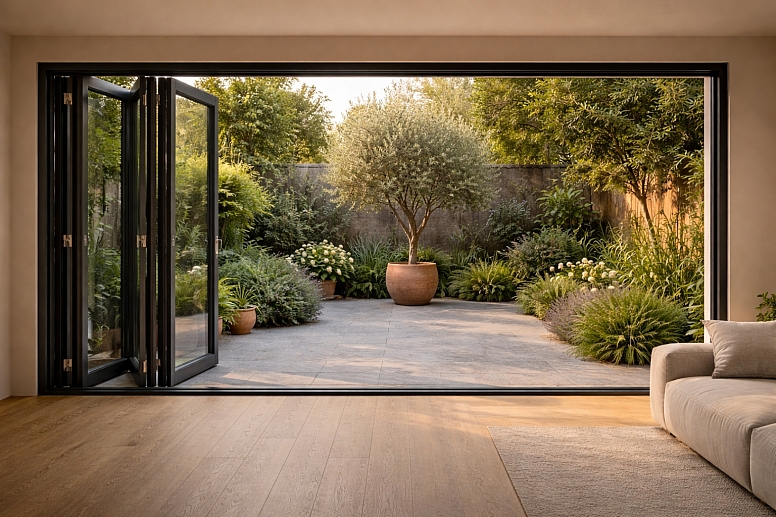
The look: A four-panel bi-fold door system (4 m wide, 2.2 m high) opening to a paved courtyard. Frame is RAL 7016 anthracite grey, satin gloss finish (40% gloss). The doors are top-hung. When closed, the meeting stiles between panels are 45 mm wide. When open, all four panels stack against the left side, leaving a 3.8 m clear opening.
Why it works: Bi-fold doors create a corner-less transition when fully open. The anthracite grey sits between black and silver, working equally with grey limestone paving, green planting, and white render. The satin gloss finish reflects planting and sky softly, integrating the frame into the garden view rather than contrasting against it.
Design mistake to avoid: Specifying bottom-rolling bi-folds. The floor track collects debris and jams. Top-hung bi-folds run on an overhead rail; the floor has only a small guide channel (3 mm wide, 2 mm deep) that stays clean.
Achieving The look: Choose a top-hung bi-fold system with a maximum leaf width of 1 m (80 kg per leaf). Specify a stainless steel guide channel recessed into the paving. Use a satin gloss powder coating (40% gloss) – high enough to reflect but low enough to hide dust. Install a flush sill that sits level with the interior floor and exterior paving.
Black Tilt-Turn Windows in a Monochrome Loft
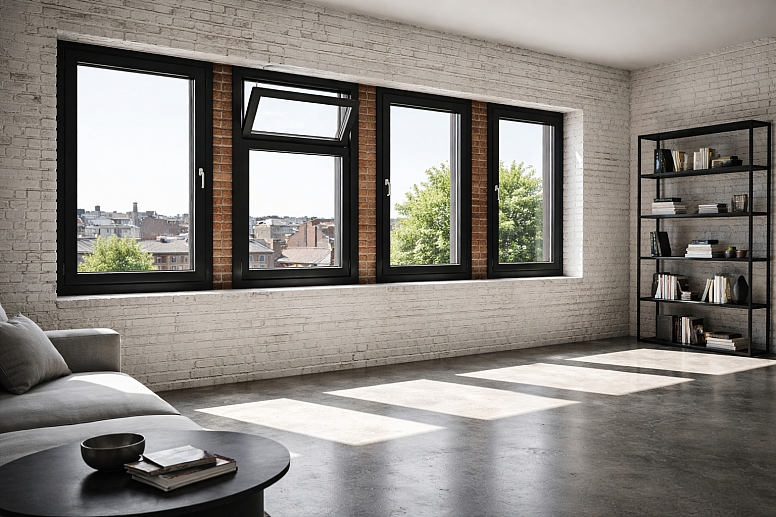
The look: A series of tilt-turn windows (1.5 m wide, 2 m high) across a converted warehouse loft. Frame is RAL 9005 jet black, high-gloss finish (80% gloss). The windows are arranged in a continuous ribbon, spaced 300 mm apart. Each window tilts from the top for ventilation or turns inward fully for cleaning and egress.
Why it works: High-gloss black reflects the loft space. The ribbon arrangement turns the windows into an architectural feature rather than individual openings. The tilt-turn mechanism allows ventilation without opening the window fully, which matters in a loft where outward-opening windows would hit exterior cladding.
Design mistake to avoid: Using standard tilt-turn hardware on windows wider than 1.2 m. Wide sashes sag. Specify reinforced hardware (12 mm spindle diameter instead of 8 mm) for sashes over 1.2 m in width.
Achieving The look: Choose high-gloss powder coating (80% gloss) – more reflective and dramatic than matte. Specify a continuous mullion system rather than individual window frames butted together. Use tinted glass (grey or bronze) to reduce solar gain while maintaining the monochrome palette.
Frame Types and Their Visual Character
| Frame System | Minimum Sightline | Visual Character | Best For |
|---|---|---|---|
| Fixed (structural glazed) | 25 mm | Invisible frame, glass-only appearance | Views, feature walls, floor-to-ceiling |
| Casement (concealed hinge) | 35 mm | Clean planar interior face | Residential windows, bedrooms |
| Tilt-turn | 45 mm | Slightly heavier, mechanism visible when open | Lofts, apartments, and ventilation needs |
| Sliding (top-hung, flush track) | 50 mm (meeting stile) | Continuous horizontal line, no threshold | Beach houses, terraces, and living rooms |
| Bi-fold (top-hung) | 45 mm (meeting stile) | Stackable, creates a full opening | Courtyards, bars, restaurant terraces |
| Lift-slide | 60 mm | Heavy, solid, industrial character | Large openings, windy sites |
Details That Separate Good from Great
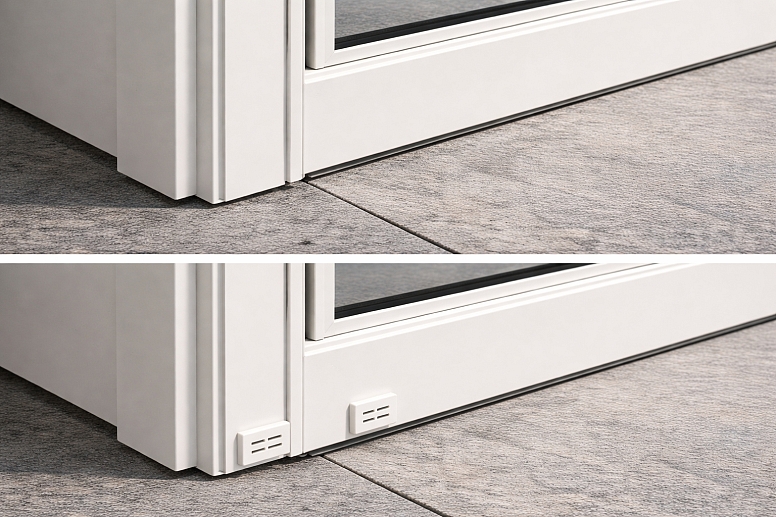
Concealed drainage: Water always enters the frame. Quality systems route water through internal chambers and out through hidden slots in the bottom face, not through visible holes in the front. Specify frames with hidden drainage for a clean exterior line.
Flush sills: A flush sill sits level with the interior floor. It requires the frame to have a thermal break and a sloping exterior face (3–5 degrees) to shed water outward. Specify a flush sill profile with a concealed slope – not a stick-on ramp.
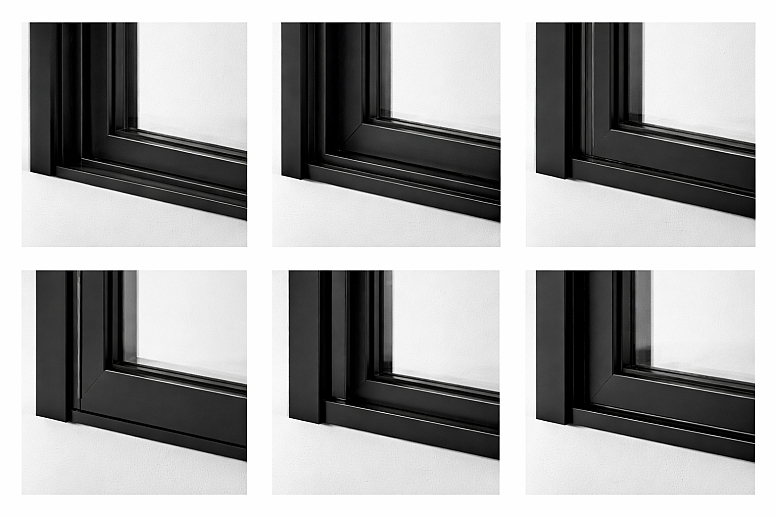
Corner joints: Mechanically crimped corners show a fine line at the mitre. Welded corners are ground smooth and coated over, creating a continuous surface. Specify welded corners for visible frame junctions (e.g., a freestanding window in a room partition).
Handle design: A recessed pull handle (flush with the frame face) keeps the planar look. A lever handle is easier to use but projects 60–80 mm. Specify recessed pulls for minimalist aesthetics, lever handles for accessibility.
Shadow gaps: A 10 mm gap between the frame and the surrounding wall, lined with black sealant, creates a deliberate shadow line. It also accommodates thermal movement. Specify a shadow gap detail rather than a caulked joint for contemporary projects.
Advanced Aesthetic Considerations
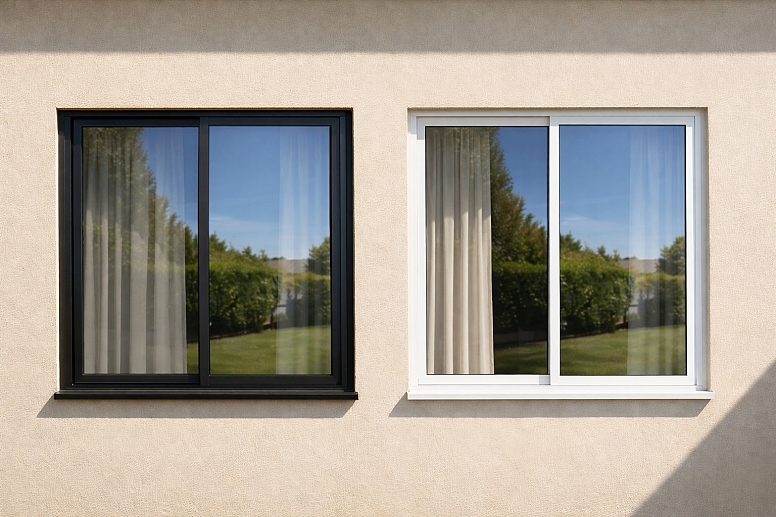
Thermal bowing and colour choice: Dark colours absorb more solar radiation. A black frame on a sunny elevation heats more than a white frame. Uneven heating across the profile can cause bowing visible from the interior. For south-facing elevations in hot climates, specify light colours (RAL 9010 white, RAL 7040 grey) or use reinforced profiles with thicker walls (2.0 mm instead of 1.5 mm).
Frame depth and shadow: A deeper frame (70 mm vs. 50 mm) casts a stronger shadow line. On a facade with deep reveals, a 70 mm frame reads as intentional. On a flush facade, a 50 mm frame reads as sharper. Match frame depth to the building's existing shadow patterns.
Reflectivity: High-gloss finishes (80% gloss) reflect the surroundings, making the frame change colour throughout the day. Matt finishes (20% gloss), stay constant. Use high-gloss to integrate frames into busy streetscapes (reflecting brick and stone). Use matt to make frames read as deliberate colour blocks.
Glass selection: The type of glass affects how the frame reads. Clear glass makes the frame the focal point. Tinted glass (grey, bronze, green) darkens the view and pushes the frame into the background. Low-iron glass (extra clear) removes the green tint from standard float glass, making the frame appear even slimmer because the glass does not compete for attention.
Common Visual Mistakes
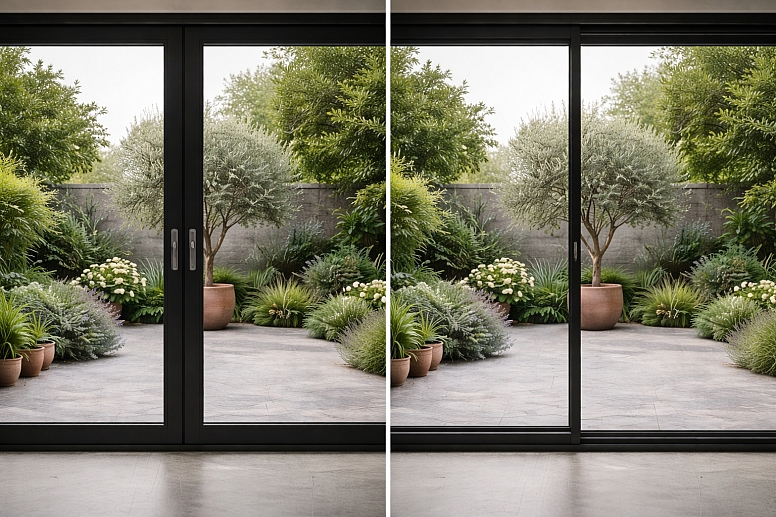
Mismatched finishes across a facade: A house with black windows on the ground floor and white windows on the first floor reads as incoherent. Choose one colour for the entire facade or use a deliberate gradient (e.g., dark grey on ground, lighter grey on upper floors).
Visible weep holes: Many aluminium frames have small slots (weep holes) on the exterior face to drain water. On a dark frame, black plastic covers hide them. On a light frame, specify colour-matched covers or specify a frame with hidden drainage.
Thick meeting stiles on sliding doors: Some sliding door systems have a 90–100 mm wide vertical stile where the two door panels meet. That is a black bar through the middle of your view. Specify systems with a maximum 50 mm meeting stile, or use a lift-slide system in which the panels compress together with a thinner interlock.
Visible hinge hardware on casement windows: Standard outward-opening windows have a scissor hinge visible on the exterior face. Specify concealed hinges (hidden between frame and sash) for a cleaner look from inside and outside.
Floor tracks that collect debris: A raised bottom track on a sliding door catches dirt, dust, and water. After six months, it looks grey and worn. Specify a recessed flush track that sits level with the finished floor.
Decision Method for Aesthetic Specification
Step 1 – Choose your relationship between the frame and the wall.
- Flush frame: frame face aligns with wall face. Clean, modern, requires precise installation.
- Revealed frame: frame set back 10–20 mm from the wall face. Creates a shadow line, hides installation tolerances.
- Projecting frame: frame sits proud of the wall. Traditional, industrial, or heritage character.
Step 2 – Select your finish family.
- Powder-coated matt: contemporary, consistent colour, hides fingerprints.
- Powder-coated satin (40% gloss): between matt and gloss, reflects softly.
- Powder-coated high-gloss (80% gloss): dramatic, reflective, shows marks.
- Anodised: metallic, changes with light, cooler to touch.
Step 3 – Decide on colour strategy.
- Monochromatic: frame matches wall colour (recedes).
- Contrast: dark frame against light wall (anchors the view).
- Accent: frame colour complements interior palette (e.g., bronze with timber).
Step 4 – Specify the invisible details.
Concealed hinges. Hidden drainage. Welded corners. Flush sill. Recessed track for sliders.
Step 5 – Verify with a full-size mock-up.
Paint a 1 m length of frame in your chosen colour. Hold it against the wall and the glass at different times of day. Colours look different on a small sample versus a full facade.
For certified thermal break profiles and dual-colour finishing options, refer to aluminum doors from manufacturers who provide facade integration support.
Answers to Visual and Aesthetic Questions
Can aluminium frames be curved?
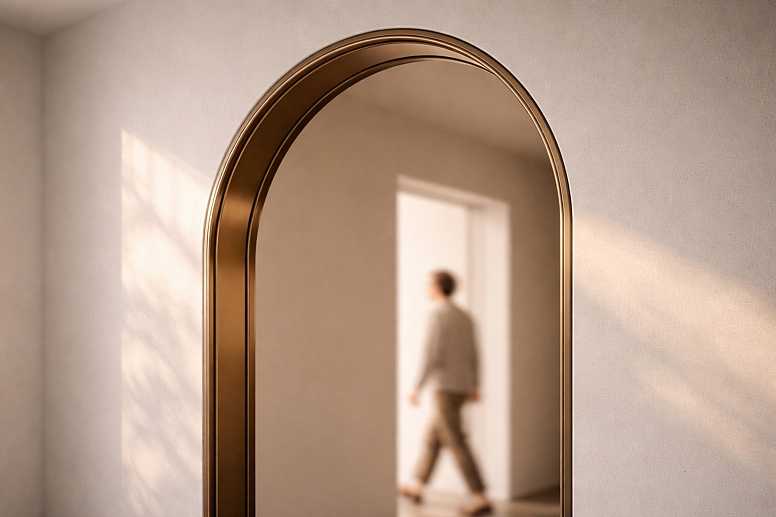
Yes. Curved extrusions are possible for arched windows or curved curtain walling. The minimum radius is typically 500 mm for residential profiles. Curved frames cost 40–60% more than straight ones and require specialist fabrication.
What is the most forgiving colour for an exterior aluminium window?
RAL 7016 (anthracite grey) reads as neutral against brick, timber, render, and stone. It does not show dust as clearly as black. It does not glare as much as white. It works in traditional and contemporary settings.
How do you make a large aluminium sliding door feel less industrial?
Use timber-look powder coating (available in oak, walnut, or teak finishes) on the interior face only. Keep the exterior face dark grey or black. Add a timber threshold or a timber-lined reveal to transition from frame to interior finishes.
Do aluminium frames work in heritage buildings?
Yes, with careful detailing. Use a slim profile (35–40 mm sightline) to mimic steel casement windows. Choose a dark bronze anodised finish or a RAL 7013 (brown grey) powder coating. Specify traditional lever handles rather than recessed pulls. The frame itself is modern, but the proportions and colour can match heritage patterns.
What is the best frame colour for maximising natural light?
White (RAL 9010) or light grey (RAL 7040). Light-coloured frames reflect daylight into the room. Dark frames absorb light and reduce perceived brightness by 10–15% compared to white frames on the same opening.
LEAVE A COMMENT
Recent Posts




0.1142