

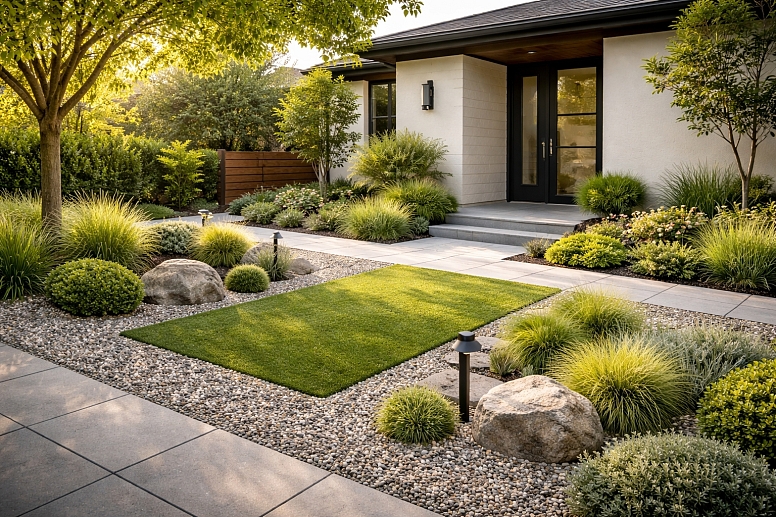
Best Low-Maintenance Small Front Yard Landscaping Ideas
Creating a beautiful front yard doesn’t have to mean constant upkeep, expensive materials, or endless weekends spent trimming, watering, and replanting. In fact, modern landscaping trends are shifting toward smarter, low-maintenance designs that save time while still delivering a polished and welcoming look. For homeowners with smaller front yards, the goal is even more focused: maximize visual impact while minimizing effort.
Whether you’re working with a compact urban plot or a modest suburban space, the right approach can transform your front yard into a clean, stylish, and easy-to-manage area that enhances curb appeal year-round.
What makes a front yard truly low maintenance?
A low-maintenance landscape isn’t just about planting fewer things—it’s about making strategic choices. The idea is to reduce watering needs, limit pruning, avoid high-maintenance grass, and incorporate durable materials that last for years. This is why many homeowners today are turning to professional hardscaping companies for guidance on balancing greenery with stone, gravel, and structural elements.
The smartest designs combine minimal plant varieties, native species, and hard surfaces that don’t demand constant care. This reduces both time investment and long-term costs.
Can you design a stylish yard without using too many plants?
Absolutely. One of the most effective ways to reduce maintenance is to scale back on plant diversity and focus on structure. Instead of filling your yard with different flowers and shrubs that require different care routines, opt for a few hardy plants that thrive in your local climate.
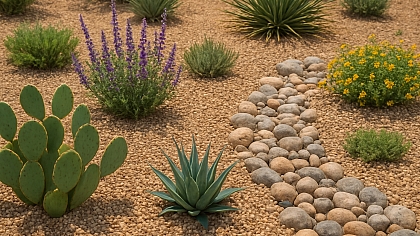
Evergreen shrubs, ornamental grasses, and drought-resistant plants are excellent choices. These require less watering, pruning, and fertilizing. A simple layout with repetition, like lining a walkway with the same plant, creates a clean and modern aesthetic without complexity.
Pairing greenery with stone pathways or decorative gravel also helps create contrast while reducing the need for constant upkeep.
Why is hardscaping becoming more popular in small front yards?
Hardscaping has become a major trend because it solves multiple problems at once. It reduces maintenance, adds structure, and increases durability. Materials like pavers, concrete slabs, and natural stone require very little attention once installed.
In smaller yards, hardscaping is especially useful because it prevents overcrowding. Instead of trying to squeeze in too many plants, you can create defined areas such as a pathway, seating nook, or decorative border.
Homeowners looking for landscaping services Austin Texas, often prefer designs that incorporate hardscaping due to the region’s heat and water conservation needs. Gravel beds, stone walkways, and raised planters are not only stylish but also practical in warmer climates.
Is artificial turf a good option for small front yards?
Traditional lawns can be one of the most high-maintenance elements of any yard. They require regular mowing, watering, fertilizing, and pest control. For small front yards, artificial turf is becoming an increasingly popular alternative.
Modern artificial grass looks realistic and stays green year-round without the need for watering or mowing. It’s especially useful in areas where water conservation is important or where maintaining natural grass is difficult.
If you prefer natural elements, you can also consider reducing lawn size instead of eliminating it completely. A small patch of grass combined with gravel or stone features can strike the perfect balance.
How can you reduce watering needs without sacrificing greenery?
Water efficiency is a key factor in low-maintenance landscaping. Choosing drought-tolerant plants is the first step. Native plants are particularly effective because they are already adapted to local weather conditions and soil types.
Mulching is another simple but powerful technique. Adding a layer of mulch around plants helps retain moisture, suppresses weeds, and improves soil health. This means less watering and less weeding over time.
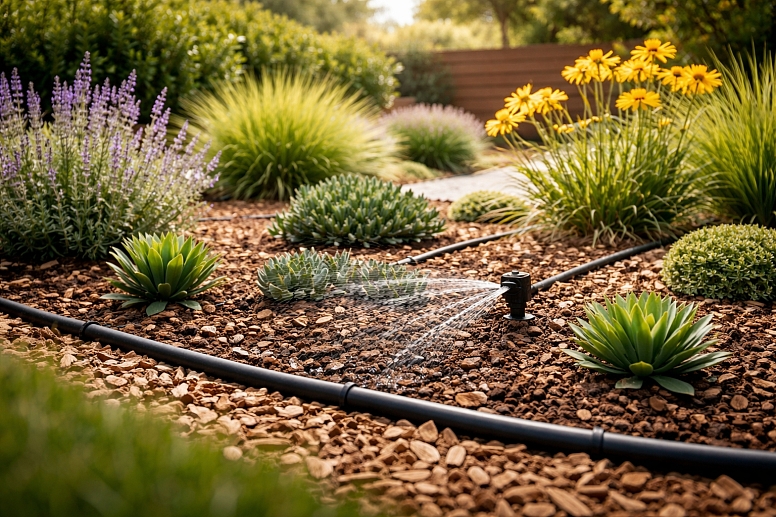
Drip irrigation systems are also worth considering. They deliver water directly to plant roots, reducing waste and ensuring plants get exactly what they need without constant manual watering.
What role does layout play in low-maintenance design?
A well-planned layout can make a huge difference in how much effort your yard requires. Clean lines, defined borders, and organized sections help reduce overgrowth and make maintenance more predictable.
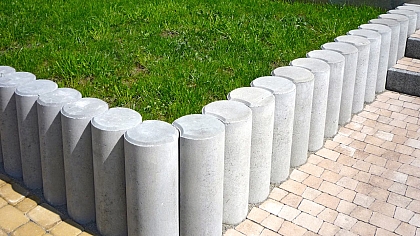
For example, using edging to separate planting areas from pathways prevents grass and weeds from spreading. Raised beds can also make it easier to manage plants without bending or dealing with soil erosion.
Professional Hardscaping Companies often emphasize layout as a key element because it sets the foundation for everything else. A thoughtful design ensures that every element has a purpose and doesn’t create unnecessary work later.
Can lighting and decor reduce the need for landscaping?
Yes, and this is a growing trend in modern front yard design. Instead of relying solely on plants for visual appeal, homeowners are incorporating outdoor lighting, decorative stones, and minimalistic features to enhance the space.
Solar-powered lights along pathways or near entryways add elegance without increasing maintenance. Decorative elements like stone sculptures, planters, or even a simple bench can create a focal point without requiring ongoing care.
This approach works particularly well in small spaces where too many plants can feel cluttered.
Is it worth hiring professional landscaping services?
While DIY landscaping can be rewarding, hiring experts can save time and prevent costly mistakes. Professionals understand soil conditions, plant compatibility, and design principles that ensure long-term success.
For example, homeowners seeking landscaping services in Austin, Texas often benefit from expert advice on drought-resistant designs and heat-tolerant materials. A professional can also help you integrate hardscaping and softscaping in a way that looks seamless and requires minimal upkeep.
In many cases, the initial investment pays off through reduced maintenance costs and increased property value.
FAQs
What is the easiest landscaping option for a small front yard?
The easiest option is a combination of hardscaping and a few low-maintenance plants. Gravel, stone pathways, and evergreen shrubs require very little upkeep while still looking attractive.
How do I make my front yard look good without grass?
You can replace grass with gravel, mulch, or artificial turf. Adding a few structured plants and decorative elements like lighting or planters can enhance the overall appearance.
Are native plants really better for low maintenance?
Yes, native plants are adapted to local conditions, which means they require less water, fertilizer, and care compared to non-native species.
How often should a low-maintenance yard be maintained?
Most low-maintenance yards only need occasional attention, such as seasonal pruning, light cleaning, and checking irrigation systems. This can be as little as once or twice a month.
Can small front yards increase property value?
Absolutely. A well-designed front yard improves curb appeal, which can significantly impact property value and create a strong first impression for potential buyers.
Categories
Recent Posts


0.0266