

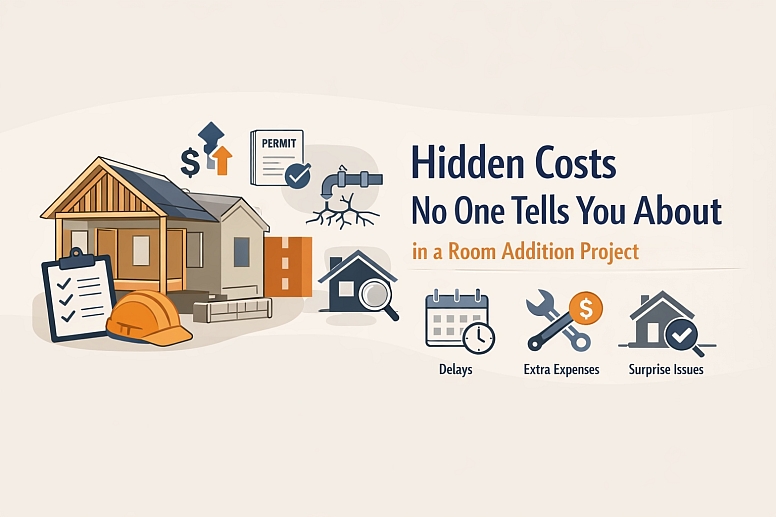
Hidden Costs No One Talks About in a Room Addition Project
Adding a new room to your home can boost space and value, but many homeowners ignore hidden costs in room addition projects that increase their budgets. If you know these hidden expenses before starting the project, that means you can avoid surprises and plan realistically.
Hidden Costs that Matter
During the making of a budget for a room addition or kitchen remodeling in San Diego, many assume the contractor will cover everything, and they estimate the costs. But in reality, the actual figure usually excludes the necessary work, the delays, the upgrades, and the compliance costs. Without including these factors below, you could spend thousands more than initially planned.
1. Permit and Inspection Fees
Most cities require permits before any construction starts so as to ensure that the project is safe and complies with zoning regulations. The cost of permits depends very much on the location and size of the project. Besides the initial permit, different inspections (foundation, framing, electrical) are usually required during various stages of the project. However, each of these inspections may also involve additional charges.
Pro Tip:
To get clear information on permits, fees, schedules, and timelines, contact your local building department as soon as possible.
2. Site Preparation and Unforeseen Conditions
Flat and clear lands may look appealing, but they might also hide problems such as tree roots, poor soil, and debris. The preparation of the site for the new foundation might need:
- Grading the land
- Removing old structures
- Fixing drainage problems
These are the steps that cannot be avoided, and they will clearly add to the labor and equipment costs. If during rooting out, unstable soil or groundwater is discovered, that will cause extra structural work and cost.
3. Utility Upgrades and Relocation
A room addition often requires extending electrical, plumbing, HVAC, or gas lines. In case your current systems do not meet the required standards, you may need:
- Electrical panel upgrade
- New circuits
- Improved plumbing lines
- Increased HVAC capacity
These extra costs in room addition are not always included in the base quotation, especially if your home's infrastructure requires significant work.
4. Design and Architectural Fees
In some places, professional plans are a necessity because permitting agencies will require detailed drawings. Architects or designers will ensure that your new space will meet the criteria from both a structural and an aesthetic goal, but their help will come with a price. Get ready to pay more for:
- Customized design work
- Structural engineering input
- Revisions
- 3D rendering
Choosing the wrong design in an attempt to save money could lead to room addition planning mistakes that will cost you more in the future.
5. Material Price Fluctuations
Material prices can change very much overtime because they depend on various factors like supply chain problems, seasonal demands, and taxes. If your project takes several months to complete, you may see a price increment in your already settled initial budget.
Pro Tip:
Whenever possible, agree on material prices with your contractor or supplier in advance.
6. Finishing Touches and Upgrades
Usually, builders provide estimates based on the “standard” finish level, while premium flooring, custom cabinetry, or high-end lighting are usually considered as add-ons. Individually, these finishing details may not appear to be significant, but their cost increases rapidly:
- Hardwood flooring vs. laminate
- Recessed lighting vs. basic fixtures
- Custom trim and molding
Expert Warning:
If these details are not provided in advance, you will have to pay extra charges later.

7. Structural Modifications
Adding a room can sometimes affect the existing structure. You might need to do the following:
- Reinforce foundations
- Install new support beams
- Modify rooflines
- Change load-bearing walls
The costs related to structural work are high and might not be apparent until the actual construction process starts. Discuss possible changes with your builder and keep some extra money for contingencies.
8. Landscaping Restoration
Construction work can damage lawns, gardens, and driveways. After your room is completed, you might need the following:
- Sod replacement
- Tree or shrub replanting
- Driveway repairs
- Fence adjustments
Creating a budget for landscaping improves the appearance of your property and prevents any surprises after the contractor leaves.
9. Waste Removal and Cleanup
The waste produced during the construction process must be disposed of either through the use of a dumpster or a hauling service. Cleanup is sometimes included in the contractor’s quote, but for many contractors, it is charged separately. The cost depends on the amount and type of waste.
10. Temporary Living Expenses
If construction affects certain important places in the house (like a kitchen or a bathroom), you may have to spend extra on temporary lodging, eating out, or even hotel stays, especially for large projects. These lifestyle costs are not included in the construction bill, but they have an impact on your overall budget.
11. Insurance and Taxes
After a room addition, your homeowner’s insurance might increase because of the increased value of the home. Moreover, with the increased square footage, property taxes may also rise. While these are not immediate out-of-pocket construction costs, they still influence long-term ownership.
12. The Real Cost of Room Additions
When you consider all these factors, such as utilities, finishes, landscaping, extra labour, and unforeseen surprises, you begin to see the true cost of room additions. Many homeowners underestimate the total cost by 20-30% or more if they just concentrate on the base contractor quote.
How to Budget Smartly
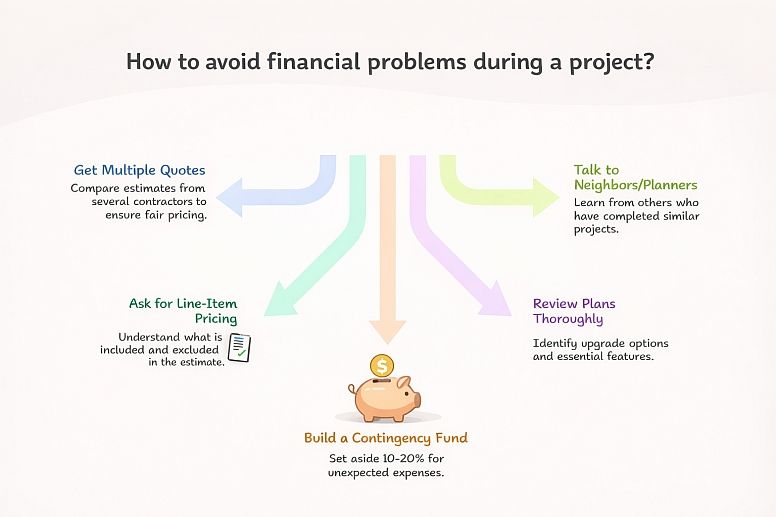
To avoid financial problems:
- Get multiple quotes—compare detailed estimates from several contractors.
- Ask for line-item pricing—understand what is included and what is not.
- Build a contingency fund—set aside 10-20% of your total budget for unexpected expenses.
- Review plans thoroughly—identify upgrade options in advance and decide what is essential.
- Talk to neighbors or local planners—learn from those who have completed similar projects.
Being aware of the hidden costs in room addition projects allows you to plan with confidence and avoid unexpected financial difficulties. Creating a realistic budget and making informed decisions will help you successfully complete your home expansion project.
Categories
Recent Posts








0.1165