
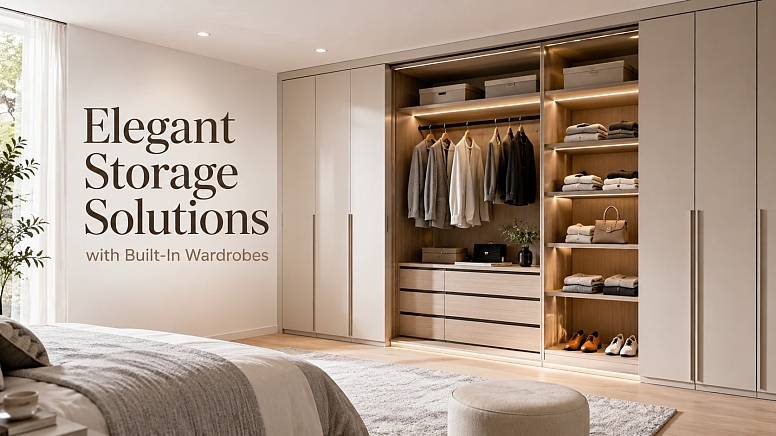
Elegant Storage Solutions with Built-In Wardrobes
At times, there is a nagging feeling inside you while looking at the bedroom you sleep in, but it's incomplete and irritating to use. As well as how the clothes collect on the chair because the wardrobe rail is packed. Spare bedding gets moved from shelf to shelf. Suitcases end up above the wardrobe gathering dust.
Built-in storage starts with the room rather than a standard furniture size. The wall shape, ceiling height and daily habits all influence what goes where. In fact, checking such details can help the aesthetic appeal of the household while elevating the comfort levels, besides how it'll feel less congested due to the excessive numbers of furniture you may not even use.
Why Built-In Wardrobes Are the Ultimate Storage Solution for Modern Homes
As we have noted, most of those pre-ready wardrobes have an unused side of the bargain when purchasing them. There may be a gap above the unit, a narrow strip at one side, or a corner too awkward for anything useful. In a small bedroom, that wasted space soon becomes noticeable.
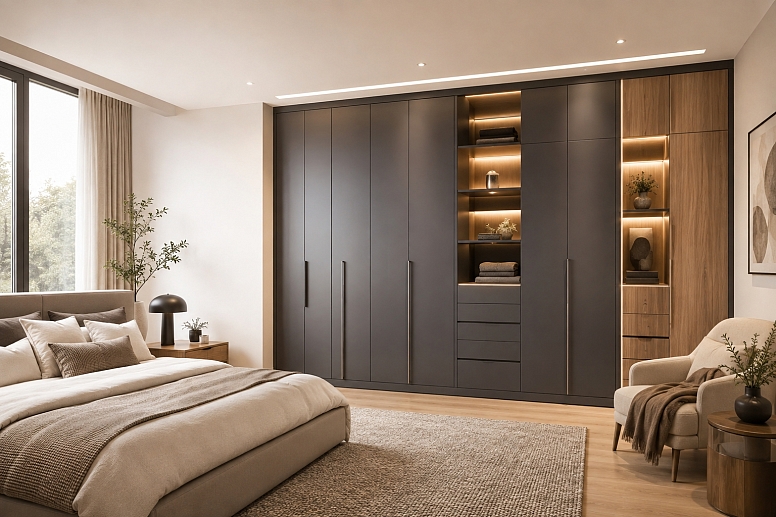
A built-in wardrobe can use it. A cupboard near the ceiling can hold suitcases or winter duvets. A shallow recess may suit folded jumpers. Space below a sloping ceiling can take shoes, bags or drawers.
The bigger difference is inside.
One household may need lots of hanging space. Another may fold most clothing. Long coats need height, while shirts often work better on two shorter rails. A standard wardrobe decides all of that before it reaches the room. A fitted one does not.
That can remove furniture elsewhere too. Drawers inside the wardrobe may replace a chest. Shoe storage behind the doors can clear the floor. All in all, there's more of a breather while no need for a storage sacrifice.
How Built-In Wardrobes Maximise Space Without Compromising on Style
Different heights, small gaps and boxes on top break up the room.
One fitted run can look calmer.
Sliding doors work well when the bed sits close to the wardrobe. Hinged doors need more room but offer easier access. A mirrored panel can also replace a standing mirror. Inside, ordinary habits matter more than showroom ideas. Useful choices often include:
- Double rails for shirts, trousers or shorter jackets
- A taller bay for dresses and long coats
- Shallow drawers for smaller items
- High shelves for bedding and luggage
- Lower shelves for shoes
- Adjustable shelving for later changes
Not every centimetre needs a special fitting. A plain shelf at the right height can be more useful than a clever pull-out that rarely gets touched.
The outside can stay simple. Pale painted doors suit compact rooms. Timber adds warmth. Darker fronts often sit better in a larger bedroom. The finish should belong with the room rather than fight for attention.
However, Custom kitchens tend to have fitted storage that actually follows the room, the household routine, and the things that genuinely need a proper place.
Design Options and Finishes: Creating a Wardrobe That Matches Your Interior
When you look at small samples, they can indeed be odd. As well as be quite misleading. A dark wood finish may look rich on a swatch, then feel much stronger across four full-height doors. Gloss can look sharp in a showroom, then show every fingerprint at home.
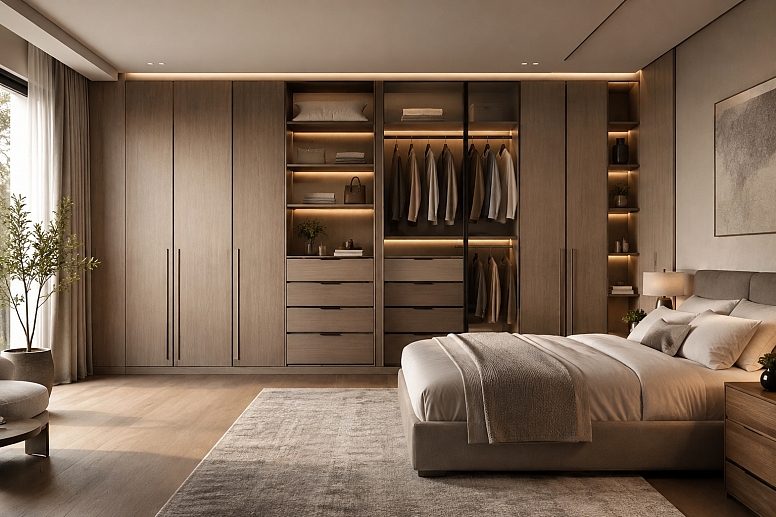
Flat fronts suit simple interiors. Shaker-style doors add detail without making the wall too busy. Wood grain can echo flooring or bedside furniture. Mirrors help a darker bedroom, although a whole wall of reflection may be too much beside patterned bedding.
Handles change the feel too. Slim pulls tend to disappear. Small knobs lean more traditional. Handleless doors look clean, but the mechanism has to cope with constant use.
Some problems only show up later. Deep cupboards are darker than expected. Very pale doors collect marks near the floor. Shelves that are too deep turn folded clothes into piles with a forgotten row at the back.
Internal lighting can fix one annoyance. Shallower shelves can fix another. A lined drawer for watches or jewellery may get more use than a decorative feature.
The interior does not need to match the doors. Not only that, but if you pay attention to the Pale fronts, they can ideally pair with warmer timber shelves.
What's more, you'll be astonished in a good way. As how you will be realising that it works well for a softer contrast that adds warmth.
Yet, there's another added perk. No congestion.
How to Plan and Install the Perfect Built-In Wardrobe for Your Space
Good planning starts with the clutter already causing problems.
If suitcases always sit on top of furniture, they probably need a high cupboard. If shoes gather beside the wardrobe, low storage deserves more room. If jumpers keep collapsing into one deep stack, the shelves are probably too deep.
Then measure the room properly, not just once. On the other hand, there is a different case for older homes. As they are often slightly uneven. For that reason, you may need to check the wall width and ceiling height in a few places. Leave room for skirting boards, sockets, radiators and windows too.
Before installation, a few checks are worth making:
- Wardrobe doors should clear nearby furniture
- Hanging sections need enough depth for normal hangers
- Useful sockets should remain accessible
- High cupboards should be safe to reach
- Internal lighting needs power planned beforehand
- Some shelves or rails should remain adjustable
Painting and electrical work are usually easier before the wardrobe goes in. Flooring may also affect the final measurements.
Professional fitting becomes more useful around slopes, uneven plasterwork or tight corners. A small gap beside freestanding furniture is easy to ignore. Beside fitted cabinetry, it looks unfinished straight away.
Small Details That Make Storage Easier to Live With
The most useful wardrobe features are often the least impressive on paper.
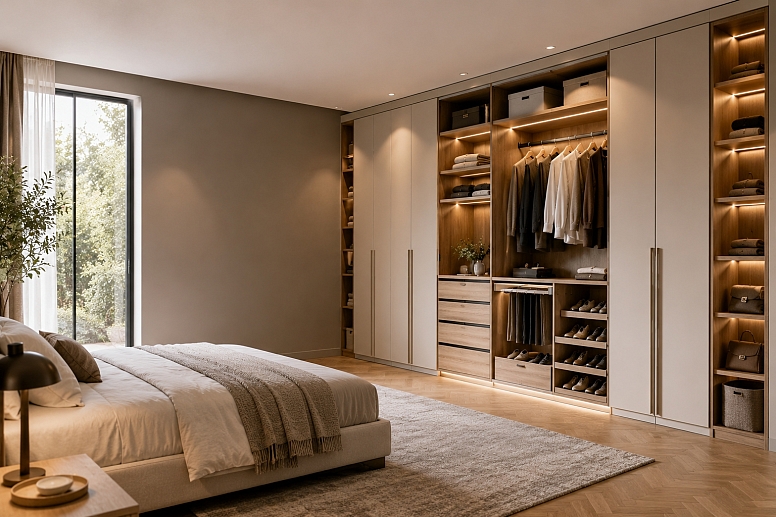
A shallow drawer keeps belts, watches and smaller items visible. A shelf for handbags stops them being squashed. A proper place for the laundry basket clears another object from the floor. Lighting near the rail makes dark clothes easier to find on early mornings.
A little space helps too. Storage does not stay the same. Another coat appears.
Storage needs rarely stay the same. A spare room might become the main bedroom. Extra luggage or bedding can turn up later too. Leaving a little room to adjust means the wardrobe can change with the household, especially with movable rails and shelves.
In fact, the matter is only relevant for a few months. It'll be quite enough time for you to see a difference. As well as how the case for every shoe is a matter to know.
For you see, it has its own position and the chair is not under a mound of clothing. On top of that, there's the case for the spare sheets being around the room but not strewn.
Built-in wardrobes should make the room easier to live with, not just give it more storage. A good fit, useful compartments, and finishes that can handle daily use matter most. The same goes for other convenient kitchen types where storage works best when it follows the space and the way the household actually uses it.
Categories
Recent Posts







0.0967