
5 Best Timber Frame Restaurant Designers & Architect Firms
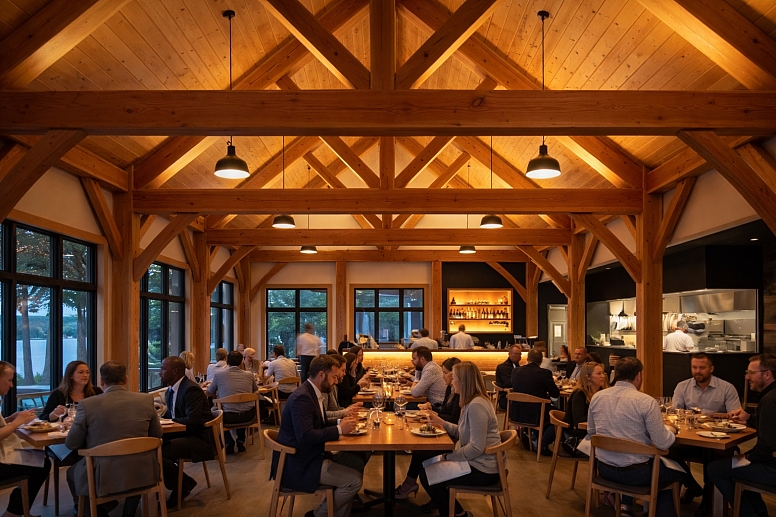
Timber is back in the spotlight. From alpine lodges to waterfront taverns, diners flock to rooms where exposed beams and soaring trusses supply instant warmth and wow. The Waterfront Tavern in New South Wales proved the trend, winning the 2022 Timber Design Award. Wood’s appeal runs deeper: each cubic metre locks away about one tonne of CO₂, turning your building into a carbon bank.
We analysed portfolios, design chops, sustainability data, client feedback, and costs to rank the five firms that do it best. Grab your coffee; we’re about to raise the (timber) bar.
How we ranked the firms
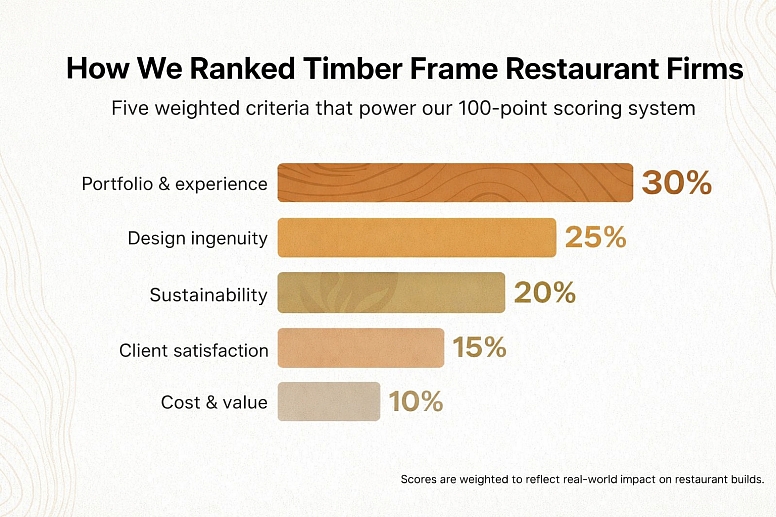
We didn’t pull names from a hat. We scored each contender against five performance pillars and weighted them by real-world impact on restaurant builds.
- Portfolio & experience (30 per cent). We counted how many hospitality-grade timber frames each firm has delivered and how long they have honed the craft.
- Design ingenuity (25 per cent). Awards, inventive joinery, or smart use of CLT and hybrid systems earned extra credit.
- Sustainability (20 per cent). Timber sourcing practices, carbon tracking, and green certifications highlighted which companies treat climate goals as core business, not window dressing.
- Client satisfaction (15 per cent). Testimonials are fine, but independent proof is better. One firm even opens every project to GuildQuality surveys and publishes an unedited contact list of past architects and builders: gold-standard transparency.
- Cost & value (10 per cent). We looked for clear pricing models, prefab efficiencies, and a track record of delivering on budget.
Each firm received a raw score for every pillar, multiplied by its weight, then summed into a clean 100-point total. That data powers the ranking you will see next, so you can focus on fit, not guesswork.
Snapshot comparison of the top five
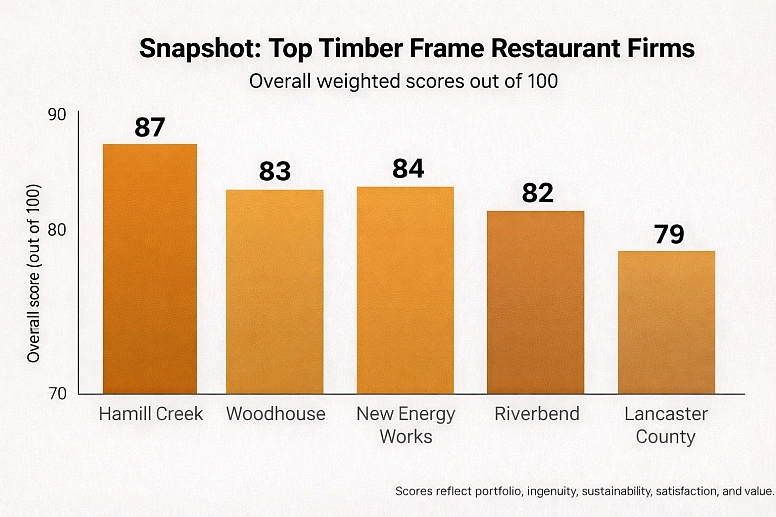
Before we dive into individual profiles, here is the at-a-glance view your project team will skim first. Treat it as a cheat sheet that reveals how each firm performs where it counts.
|
Design firm |
Portfolio (30%) |
Ingenuity (25%) |
Sustainability (20%) |
Client satisfaction (15%) |
Value (10%) |
Overall |
|
Hamill Creek Timber Homes |
9 |
9 |
8 |
9 |
8 |
87 |
|
Woodhouse, The Timber Frame Co. |
9 |
8 |
7 |
9 |
8 |
83 |
|
New Energy Works Timberframers |
8 |
9 |
9 |
8 |
7 |
84 |
|
Riverbend Timber Framing |
9 |
8 |
7 |
8 |
9 |
82 |
|
Lancaster County Timber Frames |
7 |
8 |
8 |
10 |
7 |
79 |
Scores run 0–10 in each column and already reflect the weighting we explained earlier, so that bold overall figure is your quick benchmark of strength. Use this table as a starting map; the next section unpacks the story behind each number.
1. Hamill Creek Timber Homes: craftsmanship with global reach
Walk into a Hamill Creek space, and you feel the beams first. They are hand-finished Douglas fir or reclaimed oak, scribed so tightly you could not slip a credit card between joints. That precision reflects decades of practice: the British Columbia firm has refined its craft since 1989, well before timber frames returned to restaurant design.
The team began with custom mountain homes, then moved into lodges, golf-club restaurants, and microbrewery taprooms across North America. Because design and fabrication happen side by side in the creek-side workshop, each truss ships pre-tested for strength, appearance, and quick assembly on distant sites.
That evolution now shows in a globe-spanning portfolio of timber frame commercial buildings - from Hawaiian golf-course clubhouses to Canadian Rockies resort lodges - that proves the craft scales well beyond private homes.
Owners value Hamill Creek’s single-team model. One crew sketches the concept, engineers the frame, cuts every timber, and travels to raise it. That tight loop keeps schedules predictable and lets architects add bold touches such as vaulted clerestories or hybrid steel-timber spans without blowing the budget.
Sustainability runs through the workflow. The firm sources local timber when possible, heats the shop with off-cuts, and often specifies reclaimed beams. Those posts store carbon for decades, so guests enjoy dinner under a structure that quietly benefits the climate.
Hamill Creek sits at the higher end of pricing, yet clients call the investment a bargain once the lights come on and diners share photos of the ceiling. If your brand depends on a room guests remember and a frame they can reach out and touch, this partner belongs on your shortlist.
2. Woodhouse, the timber frame company
If you prize proven process as much as beauty, Woodhouse feels like home. The Pennsylvania firm has engineered heavy-timber structures since 1979, giving it one of the deepest benches in the field. That history delivers fewer surprises: designs flow from refined 3-D modelling to CNC cutting, then to a field crew that has raised frames in all fifty states.
Restaurant owners often point to speed as Woodhouse’s quiet advantage. Because every mortise, tenon, and concealed steel knife plate is cut before the truck leaves Mansfield, onsite assembly turns into a smooth choreography. The proof came in 2020 when the lakeside Firewater Restaurant faced a pandemic-tight deadline; the frame arrived complete, snapped together in days, and let interior trades start early.
Ingenuity shows up in the envelope too. Woodhouse pairs its frames with structural insulated panels that cut energy use and trim monthly utility bills. Need wide spans for an open brewhouse? The team blends glulam or hidden steel so the room stays column-free while still reading as authentic timber.
Clients praise the company’s ambassador network. Woodhouse vets regional builders who know the system inside out, so you can tap local talent for finish work without giving up warranty or quality. That partnership model lowers travel costs and keeps communication clear after the raising crew heads home.
Cost-wise, Woodhouse sits in the middle range, accessible for independent restaurateurs yet scalable for multi-location groups. Factor in the faster schedule and lower operating expenses, and the total project math often swings in your favour. If you want artisanal bones backed by factory-level precision, Woodhouse is the steady hand to call.
3. New Energy Works: design-forward and deep-green
New Energy Works approaches timber with the curiosity of architects and the conscience of environmental scientists. Based in New York and Oregon, the employee-owned firm blends reclaimed lumber, bold geometry, and mass-timber tech to craft restaurants that feel handcrafted yet modern.
Walk into the Lake House on Canandaigua and you sense the effect. Curved scissor trusses sweep overhead, reclaimed siding wraps the bar, and daylight pours through clerestories engineered to cut lighting loads. The building tells its sustainability story without preaching, ideal for farm-to-table operators who want the space to echo the menu.
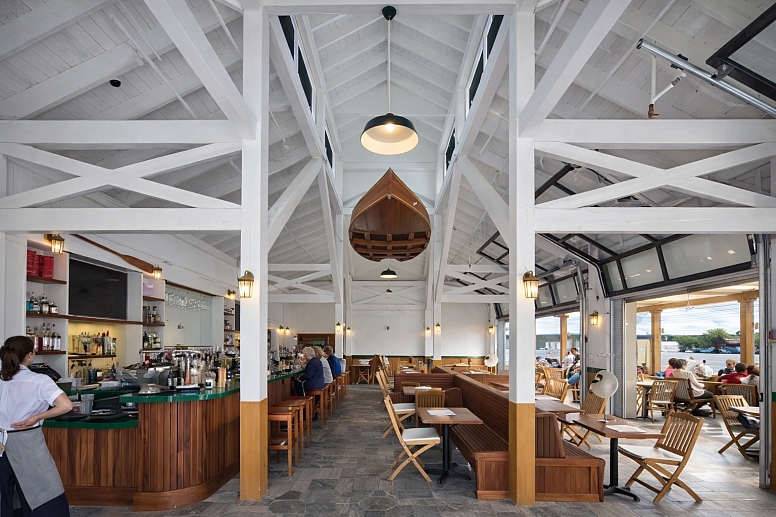
Vertical integration fuels that polish. NEW handles design, engineering, milling, and finishing under one roof, with sister company Pioneer Millworks supplying reclaimed boards. The team can prototype new joints, pre-finish panelling, and ship complete timber cassettes so onsite crews spend days, not weeks, in heavy-lift mode.
Clients value NEW’s energy modelling. Early passive-house simulations guide glazing ratios and hidden insulation, keeping HVAC tonnage under control. The payoff shows up as lower utility bills and a carbon metric you can print on the menu.
Pricing sits a notch above conventional frames because reclaimed stock and custom detailing take extra labour. Many owners recoup the premium through faster openings, energy savings, and the social buzz a photogenic structure brings. If you want a space that reads artisanal, sustainable, and Instagram-ready, New Energy Works can make your dining room speak your values.
4. Riverbend Timber Framing: turnkey muscle for big ideas
When you need a 300-seat brewpub framed, roofed, and dried in on a remote hillside, Riverbend calms the room. The Michigan-born firm pairs forty years of craft with the resources of a national manufacturing group, so it can handle projects that stretch smaller shops thin.
Riverbend’s approach is systemised yet far from cookie-cutter. Clients start with a library of proven frame geometries—barn halls, pavilions, multi-level lodge cores; then adjust bay spacing, roof pitch, or species until the structure fits both concept and budget. The PerfectFit design path trims weeks off schematics while still leaving room for signature touches like double-height king-post trusses or wraparound timber porches.
Because Riverbend owns several fabrication plants and travels with dedicated raising crews, logistics stay smooth whether your site is downtown Denver or deep in the Yukon. That capability shows in the clubhouse at Whistling Straits Golf Club in Wisconsin, a sprawling timber-framed complex that houses the Whistling Straits Restaurant.
Energy performance is baked in. Sister company Insulspan supplies structural insulated panels that enclose the frame quickly and cut heating and cooling loads, a win for kitchens battling constant exhaust. Owners report quieter dining rooms and lower utility costs than comparable steel buildings.
Budget-focused teams value Riverbend’s transparency. Pre-engineered elements let estimators lock pricing early, and volume buying keeps timber costs predictable. If you want turnkey delivery, minimal coordination headaches, and a frame sized for healthy footfall, Riverbend can take you from napkin sketch to grand opening without drama.
5. Lancaster County Timber Frames: boutique artistry, zero compromises
Some projects call for mass production; others deserve work fit for a gallery. Lancaster County Timber Frames (LCTF) sits firmly in that second camp. The Pennsylvania workshop keeps its team to about a dozen timberwrights, so every beam passes through skilled hands instead of an assembly line.
You can see the difference in venues like the John Wright Restaurant, where hammer-beam trusses read less like structure and more like sculpture. Joints are hand-cut, edges chamfered, and pegs aligned with laser-level accuracy. The same artisans who carve the frame travel to raise it, carrying their focus on fit through the final peg.
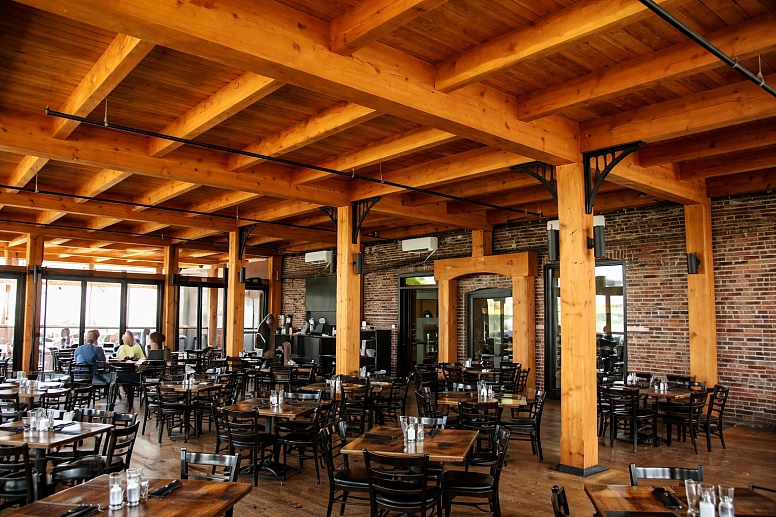
That transparency builds trust. LCTF publishes an unedited list of every architect and builder it has partnered with, plus independent GuildQuality scores. When a company invites you to call any past collaborator, you know client satisfaction runs deeper than website copy.
Because production is low-volume and almost entirely by hand, lead times are longer and budgets higher than at mechanised shops. Yet owners who crave authenticity find the payoff immediate. A true mortise-and-tenon frame becomes its own marketing tool, anchoring brand stories and wedding-venue bookings without extra ad spend.
If your concept lives in a historic district, aims for colonial charm, or simply demands a ceiling diners will photograph for decades, Lancaster County Timber Frames offers heirloom quality at commercial scale.
Choosing your ideal partner: quick decision checklist
Picking a timber-frame specialist is not just about the prettiest portfolio. Run each contender through four practical filters before you sign anything.
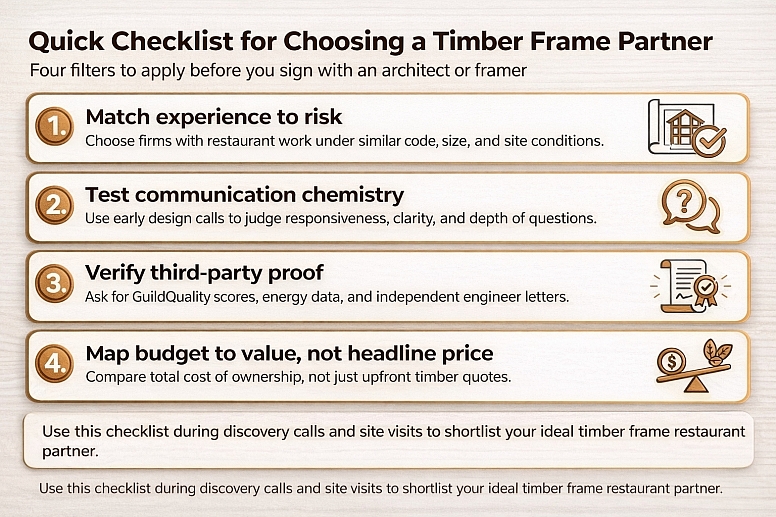
First, match experience to risk. If your project involves complex code issues such as rooftop dining or seismic loads, pick firms with several commercial jobs under the same constraints. Hamill Creek and Riverbend shine here, thanks to their wide geographic range.
Second, test communication chemistry early. Schedule design charrette calls with shortlisted teams and note who asks sharper questions about kitchen venting, fire ratings, and guest flow. The quality of those questions often predicts project smoothness.
Third, verify third-party proof. Ask for GuildQuality scores, energy-use data from past restaurants, or independent engineer letters. Lancaster County’s open reference list sets the bar, but every firm should share objective metrics.
Finally, map budget to value, not headline price. Woodhouse’s SIP-wrapped frames can cut operating costs, while NEW’s reclaimed package may earn free press and guest buzz. Run total cost of ownership scenarios, so you see beyond upfront timber quotes.
Check these boxes, and you will move forward with confidence, knowing the partner you choose fits your concept, timeline, and bottom-line goals.
Key takeaways & next steps
Timber framing offers restaurants a double benefit: memorable ambience and a carbon story diners love to hear. The five firms we profiled deliver that promise, each with its own angle, from Hamill Creek’s handcrafted spectacle to Riverbend’s turnkey muscle.
Your smart move now is to shortlist two or three companies that match your brand and risk tolerance. Set up discovery calls, share a rough program, and request high-level budgets plus timelines. You will learn as much from their questions as their numbers.
While you compare proposals, visit a finished restaurant that each firm has built. Nothing beats standing under the beams, hearing how owners handled build-out, maintenance, and operating costs.
Finally, lock scope early. Timber frames are precise systems; design freezes ensure millwork, HVAC drops, and sprinklers fit cleanly. Clear decisions up front lead to that thrilling raising day when your structure fits together like a giant 3-D puzzle.
Make these moves, and you will be on your way to opening night under a roof that works as hard for your bottom line as it does for your brand story.
Categories
Recent Posts




0.1358