

Essential Tips for Air Conditioner Repairs in Melbourne
Ever been stuck in a Melbourne heatwave while your air conditioner starts making worrying noises? Or noticed your power bills climbing for no clear reason? Maybe there’s a strange smell coming from your unit, and you’re not sure if it’s serious?
Melbourne’s weather keeps you on your toes. One minute it’s cool enough for a jumper, the next you’re battling 40-degree heat and relying heavily on your aircon. These rapid changes put extra pressure on your system, making dependable cooling less of a luxury and more of a necessity.
In this guide, we’ll cover everything you need to know about air conditioner repairs in Melbourne. You’ll learn how to spot early warning signs, understand repair costs, choose a trustworthy technician, and keep your system running efficiently for the long haul.
Whether you’re dealing with a sudden breakdown or just want to stay one step ahead, this guide will help you make confident, informed decisions about your home’s cooling.
Common Signs Your Air Conditioner Needs Repair
Unusual Noises and What They Mean
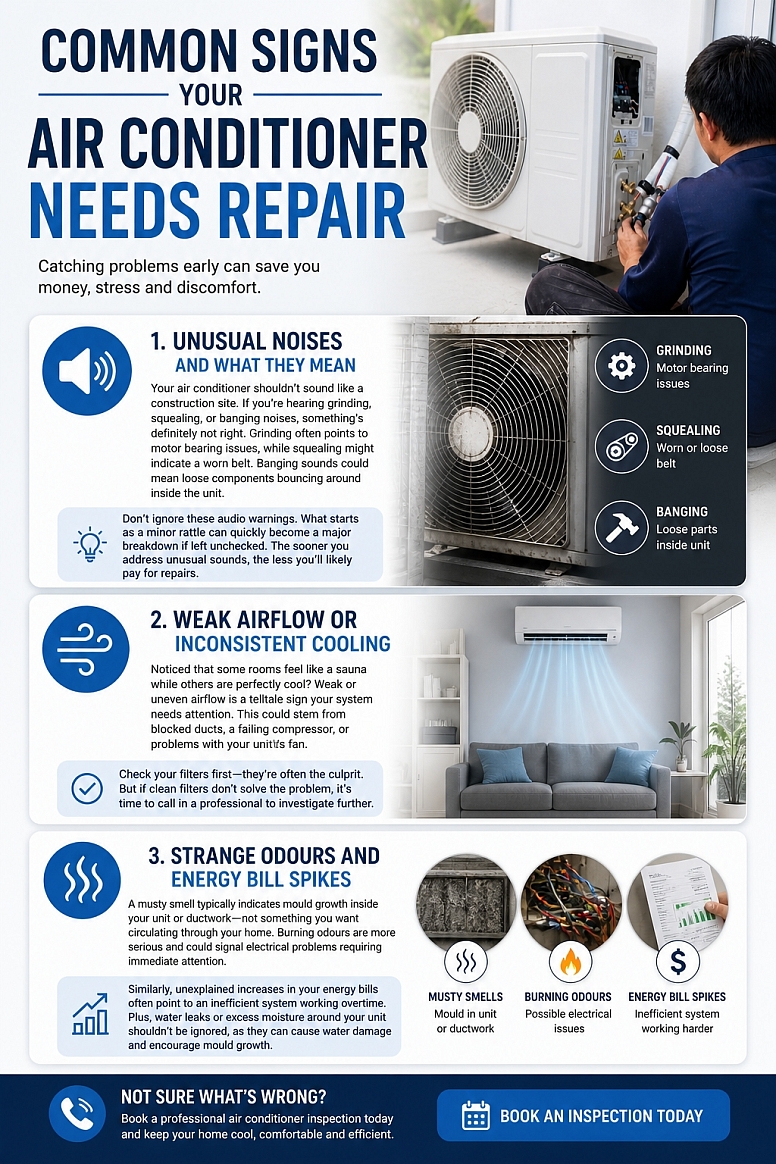
Your air conditioner shouldn’t sound like a construction site. If you hear grinding, squealing, or banging, something’s off. Grinding often signals worn motor bearings, squealing can point to a loose or damaged belt, and banging may mean internal parts have come loose.
Don’t brush off these sounds. What seems like a minor issue can quickly escalate into a costly repair. Acting early usually saves both time and money.
Weak Airflow or Inconsistent Cooling
Are some rooms uncomfortably warm while others feel fine? Uneven or weak airflow is a clear sign your system isn’t performing as it should. Causes can include blocked ducts, a struggling compressor, or fan-related issues.
Start by checking your filters; they’re often the simplest fix. If that doesn’t resolve the issue, it’s best to bring in a professional for a closer look.
Strange Odours and Energy Bill Spikes
A musty smell usually points to mould growing inside your system or ductwork; definitely not something you want circulating indoors. Burning smells are more serious and could indicate electrical faults that need immediate attention.
Likewise, a sudden jump in energy bills often means your system is working harder than it should. Leaks or excess moisture around the unit are also red flags, as they can lead to water damage and further mould issues.
How Much Does Air Conditioner Repair Cost in Melbourne?
Factors That Affect Repair Pricing
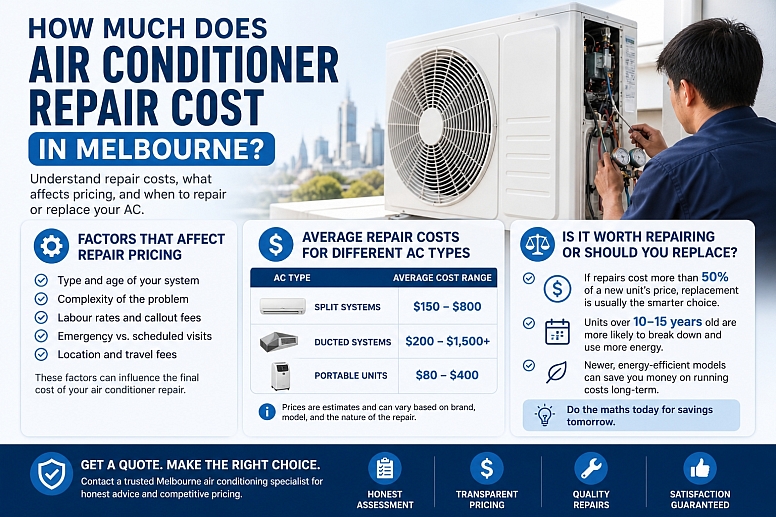
Repair costs can vary significantly based on several factors. The type and age of your unit matter; older systems often require harder-to-source parts. The complexity of the issue is another key factor, with simple fixes costing far less than major component repairs like compressors.
Labour rates differ between providers, and emergency callouts typically come at a premium. Your location can also influence pricing, particularly if travel is required to reach outer suburbs.
Average Repair Costs for Different AC Types
For split systems, minor repairs may start around $150, while more complex issues can reach up to $800. Ducted systems tend to be more expensive, typically ranging from $200 to $1,500 or more. Portable units are usually cheaper to repair, although older models may not be worth fixing.
It’s always a good idea to get multiple quotes. This helps you compare pricing and avoid paying more than necessary.
Is It Worth Repairing or Should You Replace?
A useful rule of thumb: if the repair cost exceeds 50% of the price of a new unit, replacement is often the better option. Age is another important factor; systems older than 10–15 years tend to be less efficient and more prone to breakdowns.
Upgrading to a newer, energy-efficient model can reduce running costs over time. Take a moment to weigh the long-term savings before committing to major repairs.
Can I Fix My Air Conditioner Myself?
Simple DIY Troubleshooting Steps
Before calling in a technician, there are a few basic checks you can do yourself. Make sure the unit is powered on, the circuit breaker hasn’t tripped, and your thermostat settings are correct with working batteries.
Cleaning or replacing dirty filters can often restore airflow. Also, clear any debris around the outdoor unit and ensure vents inside aren’t blocked. These simple steps can sometimes solve the problem without professional help.
When to Call a Professional Technician
Certain issues should always be handled by a qualified expert. Refrigerant handling requires proper licensing, and electrical or internal component problems can be dangerous to fix on your own.
If basic troubleshooting doesn’t work, or if you’re unsure, calling a professional is the safest move. DIY attempts on complex issues can lead to bigger problems or void your warranty.
How to Choose a Reliable Air Conditioning Repair Service in Melbourne
What Qualifications Should an AC Technician Have?
In Australia, technicians working with refrigeration systems must hold the appropriate licences. Look for an Australian Refrigeration Council (ARC) licence, which is required for handling refrigerants.
They should also have relevant electrical licences and trade qualifications. Ongoing training is a good sign that they stay up to date with industry standards. Don’t hesitate to ask for proof.
Questions to Ask Before Hiring a Repairer
Ask about their experience with your specific system type and request a detailed written quote covering both parts and labour. Check whether they offer warranties and ask about follow-up support if needed.
It’s also worth asking about response times, especially in urgent situations. Reading reviews or asking for references can give you extra confidence in your choice.
Red Flags to Watch Out For
Be cautious of technicians who provide quotes without inspecting the unit. High-pressure sales tactics or demands for full payment upfront are warning signs. Extremely low quotes can also indicate poor-quality parts or rushed work.
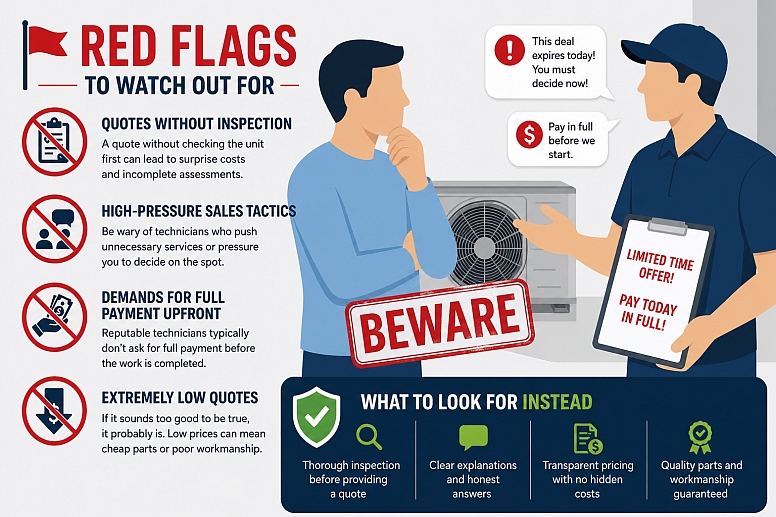
A reputable technician will be transparent, happy to answer questions, and clear about their process and pricing.
How Often Should You Service Your Air Conditioner?
Recommended Maintenance Schedule for Melbourne Homes
Given Melbourne’s changing climate, servicing your air conditioner at least once a year is recommended; ideally before summer. If you use your system year-round for both heating and cooling, twice-yearly servicing is even better.
Regular maintenance helps your system run efficiently and reduces the risk of unexpected breakdowns.
Benefits of Regular Servicing
Routine servicing can significantly extend the lifespan of your unit. It also improves energy efficiency, lowering your power bills. Clean systems promote better indoor air quality by reducing dust and mould buildup.
Additionally, many manufacturers require proof of regular maintenance to keep warranties valid, so keeping service records is important.
Emergency Air Conditioner Repairs: What to Do When Your AC Breaks Down in Summer
A breakdown during peak summer can be incredibly stressful. Start with the basics; check the power supply, thermostat settings, and circuit breakers. Sometimes the solution is simpler than expected.
If that doesn’t work, many Melbourne services offer emergency repairs, though after-hours visits usually cost more. It’s smart to have a trusted technician’s contact details ready in advance.
While waiting for repairs, keep blinds closed to reduce heat, use fans to circulate air, and stay hydrated. If needed, spend time in air-conditioned public places until your system is fixed.
How Long Do Air Conditioner Repairs Usually Take?
Most standard repairs take between one and four hours. Quick fixes like filter replacements or minor electrical work can be done fast, while more complex issues, such as compressor faults or refrigerant leaks, may take longer or require multiple visits.
Availability of parts also plays a role. Common components are usually easy to source, but older systems may require special orders, extending repair time. A good technician will give you a clear timeframe upfront.
Tips to Prevent Costly Air Conditioner Repairs
Cleaning Filters and Coils
Keeping your filters clean is one of the simplest and most effective ways to prevent problems. Dirty filters restrict airflow, forcing your system to work harder and use more energy. Aim to clean or replace them every one to three months.
Coils also need regular attention. Dust and debris can build up over time, reducing efficiency. While you can handle basic cleaning, professional servicing ensures a deeper clean in hard-to-reach areas.
Checking Refrigerant Levels and Seasonal Preparation
Low refrigerant usually indicates a leak, which a licensed technician must address. However, noticing reduced cooling early can help you address the issue before it worsens.
Prepare your system for seasonal changes by clearing outdoor units before summer and checking ductwork for damage. A bit of preventative care can save you from expensive repairs later.
Keeping Your Melbourne Home Cool and Comfortable
Maintaining an efficient air conditioning system in Melbourne doesn’t have to be complicated. By recognising early warning signs, scheduling routine servicing, and choosing qualified professionals, you can minimise repair costs and extend your unit’s lifespan.
The bottom line? Prevention goes a long way. Ignoring small issues can lead to breakdowns, higher energy bills, and unnecessary discomfort; all of which can be avoided with timely help from air conditioner repairs Melbourne specialists. Regular maintenance is a small investment that pays off in reliability and comfort.
Don’t wait for your system to fail in the middle of a heatwave; take proactive steps now and stay cool when it matters most.
Categories
Recent Posts









0.1062