
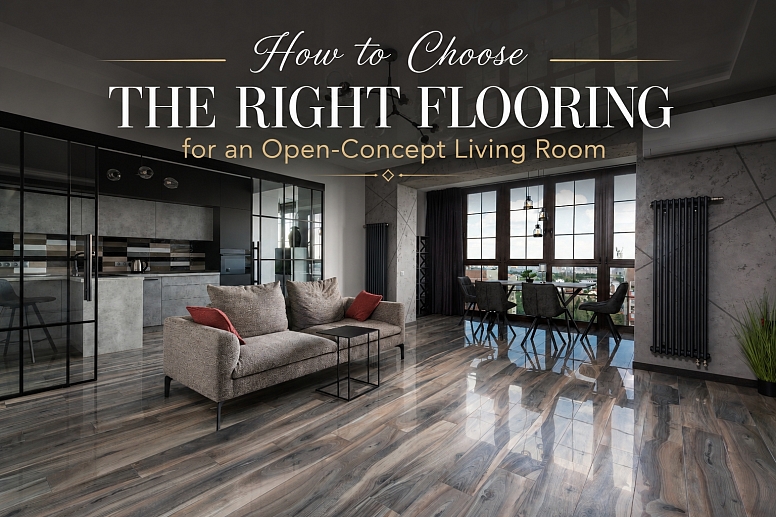
How to Choose the Right Flooring for an Open Living Room
Choosing flooring for an open-concept living room involves more than selecting a material that looks attractive. Continuity, durability, texture, light, and the relationship between different functional areas all contribute to creating a balanced and cohesive interior.
Open-concept plans have transformed the way we experience our homes. By removing unnecessary walls and creating a seamless connection between the kitchen, dining, and living areas, they encourage interaction, maximize natural light, and make interiors feel more spacious. Yet while the architecture may appear effortless, designing a cohesive open-plan space requires careful attention to every surface.
Among these, flooring plays perhaps the most important role. Rather than simply serving as a backdrop, it becomes the visual thread that ties multiple functions together while influencing comfort, acoustics, maintenance, and the overall atmosphere of the home.
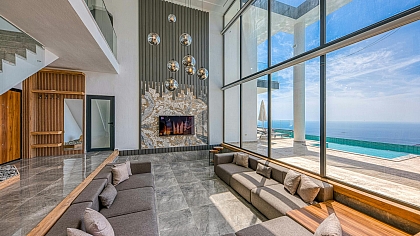
The first consideration when choosing flooring for an open-plan living space is continuity. Unlike traditional homes, where each room can have its own distinct flooring, open layouts benefit from a unified surface that creates a sense of flow. Using a single flooring material throughout the main living area eliminates visual interruptions and makes the entire space appear larger and more harmonious.
This does not mean every corner must feel identical, but maintaining consistency in material, color, and finish establishes a strong architectural foundation that allows furniture, lighting, and décor to define individual zones.
The Best Flooring Materials for Open-Concept Plans
Large-format porcelain tiles have become a favorite among architects and interior designers. Advances in manufacturing technology mean today’s porcelain can convincingly replicate marble, limestone, concrete, and even timber while offering exceptional durability and minimal maintenance.
Among the most sought-after options are concrete-effect porcelain tiles, which have become a defining feature of contemporary interiors. They capture the minimalist aesthetic of poured concrete while eliminating many of its drawbacks, such as the need for sealing, susceptibility to cracking, and more demanding maintenance.
In open-plan specifications, the concrete-effect porcelain tiles by Atlas Concorde offer a practical advantage: large-format runs across kitchen, dining, and living zones without grout interruption, maintaining the visual continuity that defines successful open layouts.
The matte concrete finish reads as a neutral architectural surface rather than a decorative statement - a quality that allows other design elements to remain primary. Large-format concrete-effect tiles further reduce grout lines, reinforcing the uninterrupted flow that defines successful open-plan design while creating a clean, contemporary aesthetic that remains timeless rather than trend-driven.
Flooring Trends Shaping Modern Open-Concept Interiors
Current flooring trends increasingly favor natural textures and earthy palettes over highly polished or heavily patterned finishes. Homeowners and designers alike are gravitating toward materials that celebrate authenticity rather than imitation. Matte finishes have largely replaced glossy surfaces, while subtle grain patterns, muted colors, and tactile textures create interiors that feel calm and enduring rather than overly styled.
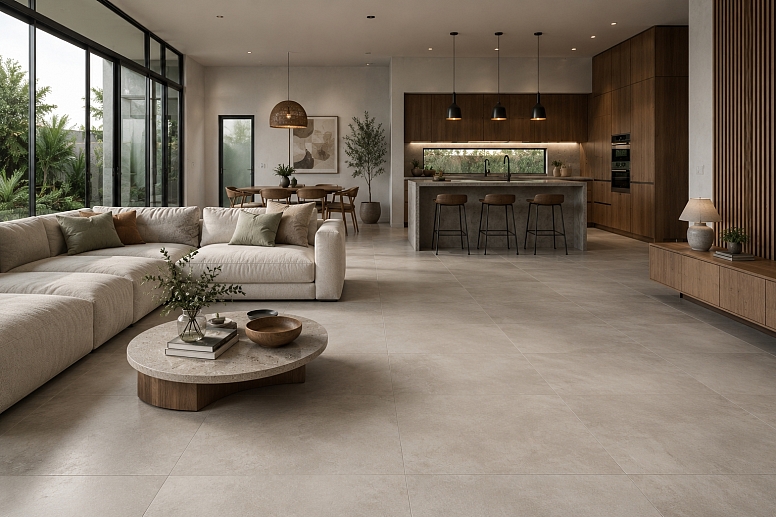
Another trend gaining momentum is the preference for larger-format flooring. Whether using timber planks or porcelain tiles, bigger formats minimize visible joints and create a cleaner, more expansive appearance. Continuous flooring that extends from indoor living areas onto outdoor terraces is also becoming increasingly popular, helping blur the boundary between inside and outside while making homes feel larger and more connected to their surroundings.
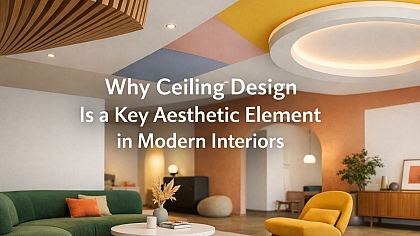
Despite the appeal of visual continuity, open-plan spaces still require functional definition. Rather than changing flooring materials between the kitchen and living room, designers increasingly rely on furniture placement, ceiling treatments, lighting schemes, area rugs, or subtle variations in layout to distinguish different activity zones. This approach preserves the spaciousness of the architecture while allowing each area to maintain its own identity.
The Dos and Don’ts of Choosing Flooring
There are several principles worth keeping in mind when selecting flooring for an open-plan home. Prioritizing durability alongside aesthetics is essential, as these spaces experience constant foot traffic, cooking activity, entertaining, and everyday family life.
Choosing a material that can withstand heavy use without quickly showing signs of wear will ensure it remains attractive for years to come. It is also important to consider how the flooring will interact with natural light, the home’s architectural style, and the surrounding finishes to create a balanced and cohesive interior.
Equally important is knowing what to avoid. Highly polished surfaces may look striking initially, but they often reveal scratches, dust, and footprints more readily than matte finishes. Mixing multiple flooring materials across one continuous space can disrupt the visual flow unless the transitions are carefully designed and serve a clear purpose.
Selecting an overly trendy color or pattern may also date the interior more quickly than timeless natural finishes. Flooring should complement the architecture rather than compete with it, providing a consistent foundation that allows the rest of the design to evolve.
Creating a Cohesive Living Space
Ultimately, the best flooring for an open-plan living space is one that successfully balances beauty, practicality, and longevity. It should connect different functions without sacrificing comfort, withstand the demands of daily living, and remain visually relevant as design preferences evolve. Whether the choice is large-format porcelain, luxury vinyl, polished concrete, or concrete-effect porcelain tiles, selecting a material that supports the home’s architecture while expressing its character will ensure the space feels cohesive for years to come.
In open-plan design, flooring is far more than a finishing touch - it is the element that quietly unifies the entire living experience.
Categories
Recent Posts



0.1079